 AgeVigor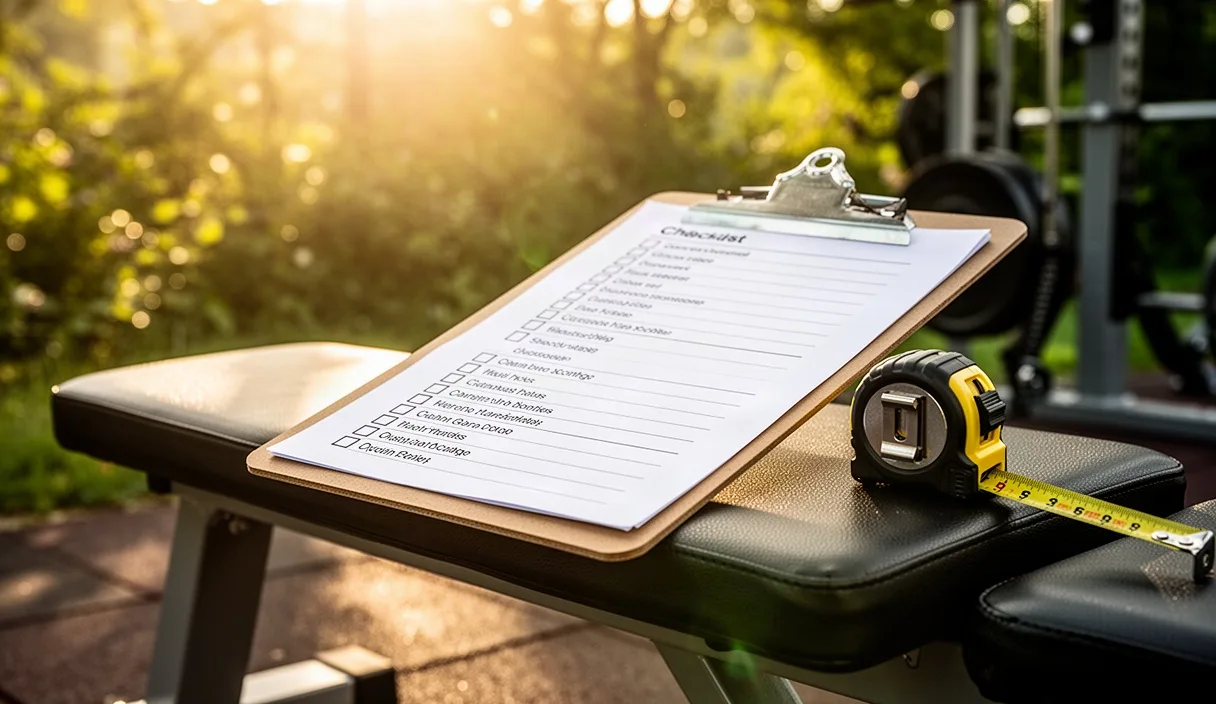

Mobility decline rarely announces itself with a single dramatic event. More often it shows up as a half-second longer to stand from a chair, a slightly shorter stride, or a reluctance to turn the head fully while backing out of a driveway. These changes accumulate slowly enough that the person experiencing them may not notice, even as family members do. A structured self-check does not replace a clinical evaluation, but it gives you a baseline and a way to track whether something is stable, improving, or worsening over weeks and months.
This checklist is organized around four physical domains that are commonly assessed in physical therapy and geriatric medicine: gait, joint range of motion, balance, and recovery time. Each section below defines what to look for, how to test it with household objects or a plain floor, and what a result might indicate. None of these tests diagnose a condition. They flag patterns worth discussing with a physician, physical therapist, or occupational therapist.
Why self-checks are useful before seeking formal assessment
A self-check serves three practical purposes. First, it creates a dated record you can bring to an appointment, which is more useful to a clinician than a verbal impression of "I've been feeling less steady lately." Second, it helps distinguish a one-off bad day, caused by poor sleep, dehydration, or new footwear, from a consistent trend. Third, it can catch early signals before they affect daily function, such as climbing stairs or carrying groceries.
Self-checks have limits. They cannot rule out neurological causes, vestibular (inner ear) disorders, medication side effects, or vascular issues, all of which can present with similar symptoms such as unsteadiness or slowed walking. If any test below produces a fall, sharp pain, dizziness, or chest discomfort, stop and consult a medical professional rather than repeating the test to confirm the result.
The checklist is designed for adults over 40 without a diagnosed mobility condition who want a baseline, and for those already managing a condition like joint mobility who want to track changes over time. If you have had a fall in the past 12 months, discuss this checklist with a clinician before using it, since some tests (such as the single-leg stance described later) carry a fall risk.
Gait and walking pace indicators
Gait refers to the pattern and mechanics of walking. Two measurable components are useful for a self-check: walking speed and stride symmetry.
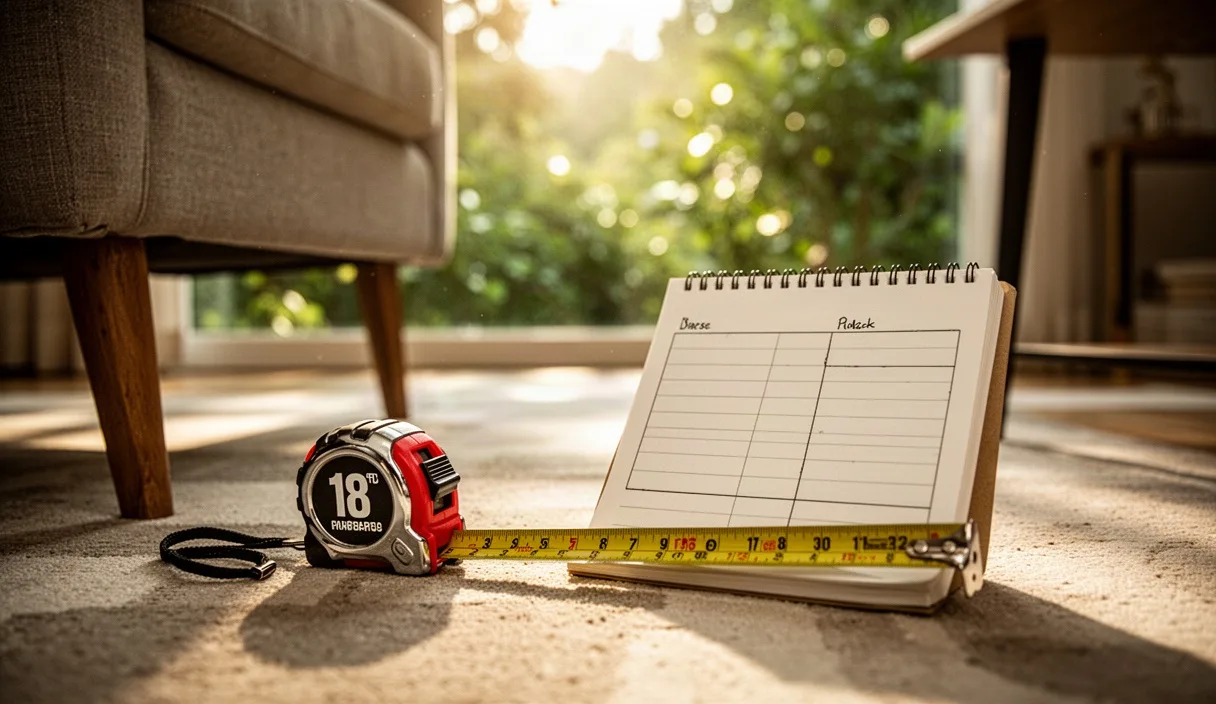
To test walking speed, measure a flat, obstacle-free distance of 4 meters (about 13 feet) using a tape measure or by counting floor tiles of known size. Walk the distance at your normal, comfortable pace, timing yourself with a phone stopwatch from the moment your first foot crosses the start line to when it crosses the finish line. Repeat three times and average the results. A walking speed below 0.8 meters per second (roughly 10 seconds or more to cross 8 meters, or about 13 seconds for 4 meters at a slow pace) is a figure some clinical studies associate with increased frailty risk in older adults, though this threshold is a population average, not an individual diagnosis.
For stride symmetry, walk across a room on a surface where your footprints would be visible if wet, such as after stepping out of a shower, or have someone watch from behind. Watch for one foot landing noticeably closer to the midline than the other, a foot that drags or scuffs, or one arm swinging less than the other. Asymmetry that is new, rather than longstanding from an old injury, is worth noting with a date.
- Normal variation: speed differs by less than 0.1 m/s between repeated trials on the same day.
- Worth tracking: a drop in speed of more than 0.1 m/s compared to a reading taken one month earlier.
- Worth discussing with a professional: new dragging, scuffing, or one-sided arm swing loss.
Range-of-motion checks for hips, shoulders, and spine
Range of motion (ROM) is the degree to which a joint can move through its full arc before stopping due to stiffness, pain, or structural limitation. These checks use visual landmarks rather than a goniometer (the angle-measuring tool used in clinics), so they are approximate.
For hip ROM, stand holding a chair back for support and lift one knee toward your chest as high as comfortable. A knee that reaches hip height without strain suggests functional flexion; a knee that stalls at mid-thigh height, especially if this is new compared to six months ago, suggests reduced hip flexion.
For shoulder ROM, stand with your back against a wall and raise both arms overhead. Full range is reaching the wall with the backs of your hands while keeping your lower back flat against the wall. Reaching only to ear height, or needing to arch the back to get the arms up, indicates reduced shoulder flexion, which is common with rotator cuff changes or frozen shoulder (adhesive capsulitis).
For spinal rotation, sit in a chair with arms crossed over the chest and rotate the torso to look as far behind you as possible, first left, then right. Note a fixed point in the room, such as a doorframe, that marks how far you turned. A difference of more than about 15 to 20 degrees between left and right rotation, or a reduction compared to a prior check, is worth recording.
| Joint | Test position | Flag for follow-up |
|---|---|---|
| Hip | Standing knee lift | Knee does not reach hip height |
| Shoulder | Wall-supported overhead reach | Hands stop below ear level |
| Spine | Seated rotation, arms crossed | Left-right asymmetry over 15-20 degrees |
Balance-related warning signs
Balance testing carries a genuine fall risk, so these checks should be done near a wall, counter, or sturdy chair that can be grabbed immediately if needed. Do not attempt these tests alone in a bathroom with hard, unforgiving surfaces nearby.
The single-leg stance test involves standing unsupported on one leg, hands on hips, eyes open, timing how long balance is held before the raised foot touches down or touches the other leg for support. Ten seconds or more is a commonly cited functional benchmark for adults in their 50s and 60s, though normal ranges decrease with age and vary by source. Holding under 5 seconds consistently, especially if this is a new change, is a signal worth discussing with a professional.
The tandem stance test involves standing with one foot directly in front of the other, heel to toe, as if on a tightrope, for up to 10 seconds. Needing to step out of position repeatedly, or being unable to hold the position at all, suggests reduced proprioceptive or vestibular balance control.
Other balance-related warning signs to note without formal testing include: reaching for furniture while walking across a familiar room, feeling unsteady when turning the head while walking, and a sensation that the room tilts briefly when standing up from sitting (this last sign can indicate orthostatic hypotension, a drop in blood pressure upon standing, and should be mentioned to a physician if it happens more than occasionally).
How often to repeat the checklist
A monthly interval is a reasonable default for adults without a known mobility condition. This spacing is frequent enough to catch a developing trend within a season but infrequent enough to avoid mistaking normal day-to-day variation for decline.
For adults managing an existing condition such as joint mobility, a prior fall, or recovery from surgery, a biweekly (every two weeks) check provides more responsive data, particularly if a clinician has asked for updates between appointments.
Always perform the check under similar conditions each time: same time of day, similar footwear (or consistently barefoot), and not immediately after exercise or a long period of sitting, both of which temporarily affect gait and ROM results. Testing right after waking, when stiffness is often highest, will produce different numbers than testing in the early afternoon.
What results suggest seeing a specialist
No single result from this checklist is diagnostic. The pattern that matters most is a consistent decline across two or more consecutive checks, or a single result that is paired with pain, dizziness, or a fall.
- Walking speed drops by more than 0.1 m/s across two consecutive monthly checks.
- Single-leg stance time falls below 5 seconds on both sides, or drops by half compared to a prior reading.
- New asymmetry appears in gait, shoulder reach, or spinal rotation that was not present in the previous check.
- Any test triggers dizziness, chest tightness, shortness of breath, or near-falling.
A primary care physician can rule out or identify medication side effects, blood pressure issues, and vitamin D or B12 deficiencies, all of which affect balance and gait. A physical therapist can assess joint-specific causes of reduced ROM and design a targeted exercise plan. An audiologist or ENT specialist may be relevant if dizziness or vertigo is a recurring factor. This checklist is a screening tool to decide whether that conversation is worth having sooner rather than later, not a substitute for it.
Recording results in a simple log
A log does not need special software. A notebook, spreadsheet, or notes app with one row per check date works. Record the date, the three gait-speed readings and their average, single-leg stance time for each leg, tandem stance success or failure, and any new symptoms (pain location, dizziness, near-falls) noted during the session.
Keep the log in a consistent format so rows are comparable month to month. A simple column structure might be: Date, Gait speed (m/s), Single-leg left (sec), Single-leg right (sec), Hip ROM (reached/did not reach hip height), Shoulder ROM (reached/did not reach wall), Notes. Bring the log, printed or on a phone, to any relevant medical appointment.
Common mistakes
Testing on an inconsistent surface, such as carpet one month and hardwood the next, changes results independent of actual mobility change. Comparing your results to a family member's or a generic "normal" age-based number, rather than to your own prior readings, leads to false reassurance or false alarm. Skipping the warm-up of a few minutes of normal walking before timed tests, or testing immediately after a workout, introduces variability that masks or exaggerates real trends. Finally, repeating a balance test after a near-fall during the same session, in an attempt to "get a better number," increases actual fall risk and should be avoided; stop the session and try again another day.
Next steps
Start with a single baseline session this week: measure gait speed over 4 meters, test single-leg stance near a wall, and check shoulder and hip ROM using the positions described above. Record the numbers in a simple log on the same day you read this. Repeat on a monthly or biweekly schedule depending on your current health status, and bring the log to your next physical or to a physical therapy consultation if any of the follow-up flags in this article appear. If a test produces dizziness, pain, or a near-fall at any point, stop and contact a healthcare provider before continuing the checklist.